
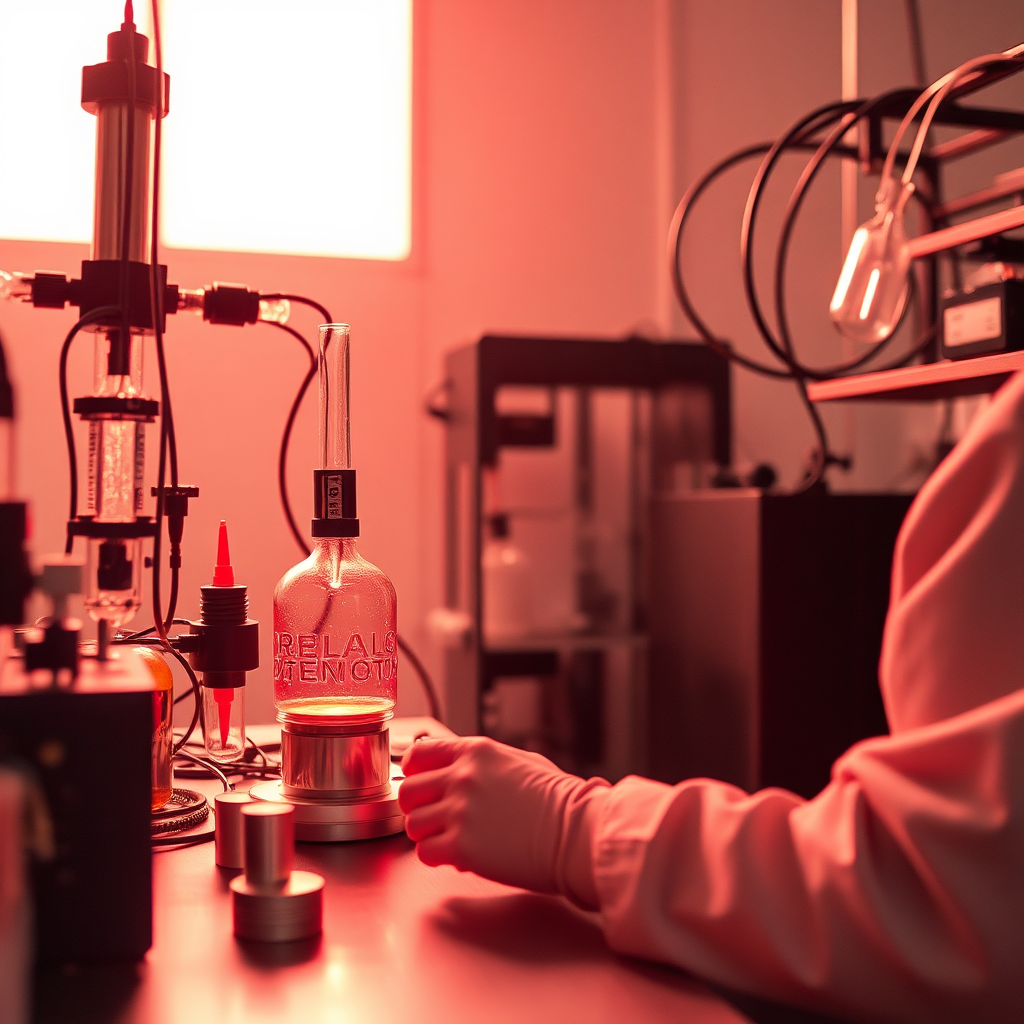



Nature as the Final Reviewer: Building Breakthroughs That Survive Measurement
QUANTUM INNOVATION is built around a simple constraint: in frontier physics, the only result that matters is the one that remains true after calibration, controls, replication, and stress. We work where matter becomes non-linear, unstable, and difficult to measure—and we treat metrology and falsification as the foundation of any credible path from concept to engineering reality.
Why we exist
Our work began with a recurring problem in deep science: a gap between what appears physically possible in principle and what can be achieved in the lab with consistency. In extreme regimes—high fields, strong gradients, non-equilibrium phases, and complex material states—systems often produce signals that look like discoveries until you account for drift, coupling, boundary conditions, and hidden variables. QUANTUM INNOVATION was formed to close that gap with a disciplined, фундаментальная (fundamental) approach: theory-informed, measurement-driven, and engineered for reproducibility.
We treat scientific claims as engineering liabilities until they are demonstrated under defined conditions, measured with appropriate metrology, and independently reproducible. Precision of language matters because it prevents self-deception. Patience matters because the most promising regimes only become useful when they can be stabilized, measured, and scaled without losing their behavior.
Our philosophy: falsifiable, measurable, repeatable
We build from first principles, but we do not worship theory. We use theory as a compass to design experiments that can disprove us quickly. Every program is structured around a question that can be answered with evidence: what must be true, what can be measured, what would rule the concept out, and what uncertainty is acceptable.
This philosophy shapes our external posture. Public language should be conservative; internal milestones should be strict. Strategic ambition is allowed—but only when paired with a validation logic that makes a future breakthrough defensible rather than promotional.
What makes our approach distinct
Many organizations have strong ideas; fewer have an integrated system that can determine whether an idea is real. What distinguishes QUANTUM INNOVATION is not a single “secret,” but the integration of capabilities that are often fragmented across institutions.
1) Extreme-regime discipline. We work deliberately in regimes where stability is not guaranteed. We engineer the experimental environment so that the regime can be held long enough to learn something true.
2) Metrology as a first-class component of discovery. Programs often fail not because the physics is wrong, but because the measurement is ambiguous. We design around signal provenance, calibration paths, controls, and error budgets from the beginning.
3) Conservative narratives with ambitious roadmaps. We avoid premature claims while still stating the decisive experiments, the criteria that would constitute a genuine breakthrough, and the logic of staged progress.
4) Architecture for responsible disclosure. Our research directions are built to support major future announcements without forcing them. Evidence comes first; public claims follow only when replication and uncertainty bounds justify them.
Research directions (as services)
Our work is organized as standalone engagements or longer programs, depending on risk level and maturity.
Frontier Physics & Feasibility R&D. We evaluate high-risk concepts using an explicit falsification plan. Typical outputs include a feasibility dossier, a decisive test matrix, key parameters, and a prioritized experimental roadmap.
Extreme States of Matter Experimentation. We design and execute experiments in non-linear and non-classical regimes, with an emphasis on stability and measurement integrity. Outputs include validated procedures, datasets, and analysis with uncertainty bounds.
Advanced Materials Research & Characterization. We build structure–property understanding that survives real-world constraints. Outputs include material “passports” (composition, processing history, microstructure), performance metrics, and failure modes.
Next-Generation Energy Technology R&D Support. We work where physics, materials, and systems constraints meet. Outputs include performance envelopes, constraint maps, and staged validation plans that make scaling discussions concrete.
Scientific Due Diligence & Technical Advisory. We provide rigorous review for investors and partners evaluating deep-tech claims: measurement integrity, missing controls, replication requirements, and risk. Outputs are decision-useful reports grounded in evidence and uncertainty.
How we work: a system designed to minimize ambiguity
1) Framing & first-principles baseline. We define the physical claim or target outcome precisely, then map constraints such as thermodynamic limits, stability regimes, and scaling laws.
2) Hypothesis + falsification plan. We specify what would confirm the hypothesis and what would refute it. The goal is not to generate excitement; the goal is to generate a decisive result.
3) Experimental architecture & metrology design. Instrumentation, calibration routines, environmental controls, and data acquisition are designed together. We build the error budget early so “success” is not an artifact of noise, drift, or coupling.
4) Prototype / sample fabrication (when applicable). We fabricate with controlled histories and documented provenance, tracking variables as rigorously as a laboratory tracks reagents.
5) Testing, replication, stressing the result. We replicate and then stress the system to expose failure modes, parameter sensitivities, and stability boundaries.
6) Analysis, model update, iteration. Models are updated based on data, not preference. Failed hypotheses are documented; successful ones are tightened and tested under harsher conditions.
7) Documentation & deliverables. Outputs are built to withstand scrutiny: protocols, datasets, plots with uncertainties, and explicit statements of what is proven, likely, and unknown.
8) Roadmap to next stage. Each phase ends with the next decisive experiment, resource requirements, and criteria for scale-up or responsible disclosure.
Selected work (representative, non-sensitive)
Project LATTICE-9 — Stability First: A Reproducible Extreme-State Testbed. We built an experimental platform optimized for repeatability under difficult conditions. The core achievement was a metrology architecture that separated real physical transitions from instrument drift and environmental coupling. This became an internal standard: if a result cannot survive replication and error analysis, it cannot serve as a foundation for technology.
Project CRYOSTREAM — Measuring Transport Where Materials Stop Behaving Politely. We conducted transport and thermal characterization across narrow windows of temperature, field, and microstructure. Calibration, controls, and sensitivity mapping were central. The outcome was not a single headline number, but validated protocols and a clear identification of parameters that truly dominate performance versus those that only appear significant due to measurement artifacts.
Project AURORA-M — Structure–Property Maps for an Advanced Materials Platform. Instead of chasing a “best sample,” we built a processing–microstructure–property landscape: where performance is stable, where it is fragile, and what failure modes appear under stress. This kind of map is what converts a laboratory curiosity into an engineerable platform.
How to engage
We design the website—and our collaborations—to be legible to scientific partners and credible to investors: transparent assumptions, explicit uncertainties, and evidence-driven milestones.
If you want to initiate a serious technical conversation, we offer an initial structured R&D framing session. The output is a concise technical brief: the hypothesis in precise terms, the decisive experiments, measurement integrity requirements, and key risks. For partners and investors assessing claims, we can also provide a short-form scientific due diligence pre-read checklist focused on replication criteria, controls, and error budgets.
What we will not do
We do not promise outcomes we cannot measure. We do not treat one-off results as proof. We do not substitute narrative for replication. When we move toward a breakthrough claim, it will be because the experimental foundation makes it real—and defensible.